Why Is My Toilet Running? Common Causes and Fixes!
A continuously running toilet may seem like a small annoyance, but that constant sound of running water can waste hundreds of gallons of water. Over time, it may even be a sign that something inside your toilet needs to be repaired.
If you hear your toilet running water long after you have flushed, notice it periodically turning on by itself, or hear water constantly moving through the bowl, you are likely dealing with a problem inside the toilet tank itself.
Well, the good news? Many issues involving a running toilet are relatively simple to fix. Although, if you are not sure what is causing the issue or the issue continues after making an adjustment, a professional plumber can help identify and solve the issue and make sure your toilet is working properly and efficiently.
At NRH Plumbing, we provide residential plumbing services throughout the Twin Cities metro area, including toilet repairs, fixture installation, and other common plumbing repairs and services Minnesota homeowners need.
Why Is My Toilet Constantly Running?
There are several reasons a toilet in your home may continue to run long after it has been flushed. The most common cause of this is a worn-out flapper, an improperly adjusted float, a faulty fill valve, or a problem with the toilet's handle or flush valve.
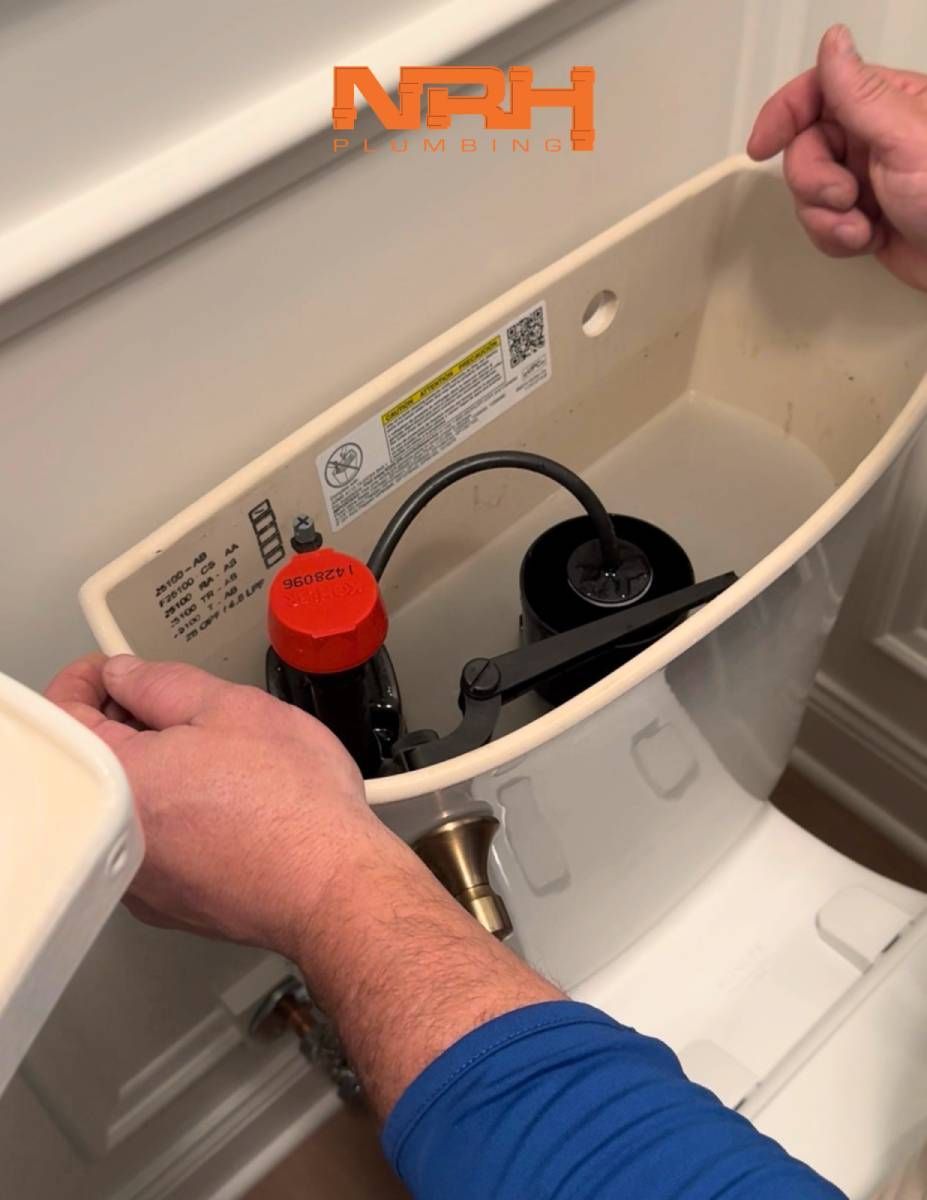
Because most of the toilet's components are located inside the toilet tank, you can often get a good idea of what is wrong by looking in this one place. Simply lifting the tank lid at the back of the toilet gives you great visual access to the main mechanisms of the toilet.
Here are the most common reasons for a running toilet that we see on our day-to-day plumbing calls in the Twin Cities.
1. The Toilet Flapper Is Worn Out
This one is at number one for a reason. A faulty flapper is often a common diagnosis for a running toilet.
The flapper is a rubber or plastic piece at the bottom of the toilet tank that lifts up when you flush. When the toilet is flushed, the flapper lets stored water leave the tank and refill the bowl. Once the tank empties, the flapper should drop back down into place and create a seal for water to once again fill the tank.
With time, the flapper can become worn, cracked, warped, or even brittle. Mineral buildup can also prevent it from creating a proper seal.
When the flapper does not seal correctly, water will slowly leak from the tank into the toilet bowl. The toilet system will sense that the tank is not full and continue to add water to the tank, creating a constant running cycle.
Signs you may have a bad flapper:
- Your toilet runs intermittently
- You hear water trickling into the bowl
- The toilet periodically refills when no one has recently used the toilet
- The toilet runs for a long time after flushing
- You notice ripples or movement in the toilet bowl water without flushing.
Replacing the flapper is, for the most part, a straightforward repair. It is important to make sure you have the correct placement, though, as not every toilet flapper fits every kind of toilet.
2. The Fill Valve is Failing
The fill valve is another one of the usual suspects when a toilet won't stop running.
After you have flushed, the fill valve allows fresh water to enter the toilet tank and refill the reservoir. Once the tank reaches its set water level, the fill valve should shut off.
If the valve is worn out or not working properly, it may shut off completely. This is an instance where you would hear water constantly running into the tank, even when the tank appears to be full.
A failing fill valve may also cause your toilet to make somewhat strange noises like humming, whistling, or even hissing.
If adjusting the valve does not solve these issues, replacing the fill valve is ultimately your best option.
3. The Float Is Set Too High
Your toilet has a float inside the tank that helps control how much water enters the tank.
When the water reaches the correct level, the float will signal the fill valve to shut off. If the float is set too high, the tank will overfill.
When this happens, the water will continuously flow into the overflow tube inside of the tank.
If you take a look inside your toilet tank, you may observe the water level in the tank. If it is too high and spilling into the overflow tube, the float or fill valve may need to be adjusted to correct this issue.
The inner workings of toilets can be slightly different. Some have a traditional ball-shaped float, while others have a cup-style float attached to the fill valve. Keep this in mind as you take a look and identify the different mechanisms.
4. The Toilet Chain Is Too Tight or Too Loose
The chain is what connects your toilet handle to the flapper. It is a small but important part of your toilet's operational system.
If the chain is too tight, it might prevent the flapper from making full contact to close the tank access after you flush. If it is too loose, it might not lift the flapper high enough, or properly, when you press the handle, resulting in the toilet not flushing fully.
If the chain is too tight, or too loose, both can cause your toilet to run.
Sometimes a simple adjustment to the chain can easily solve this issue. However, if the chain, handle, or flapper are damaged, the components may need replacing.
5. The Flush Valve Isn’t Sealing Properly
The flush valve is the opening at the bottom of the toilet tank where water flows into the bowl after you flush, refilling the bowl for the next use of the restroom.
If the flush valve itself or the seal is damaged, water can leak from the tank into the bowl when it is not supposed to.
This can sometimes be mistaken for a bad flapper that we spoke about in reason number 1.
If you have replaced your flapper but the toilet continues to run, the flush valve or another component inside the tank may need to be inspected.
6. Mineral Buildup Is Affecting The Toilet
Many Minnesota homeowners also deal with mineral buildup from hard water. This especially affects the inside of your plumbing fixtures, including your toilet components.
Mineral buildup accumulates over time around valves, seals, and other important mechanisms in your toilet. This buildup can prevent parts from moving properly or create gaps where water can eventually leak out.
If you have an older toilet, or simply notice visible mineral buildup inside of the toilet itself, replacing the affected parts will most likely be the most effective way to proceed, rather than constantly adjusting them.
Learn more about how hard water affects your home!
How To Tell If Your Toilet Is Leaking
Sometimes a toilet can be leaking without you noticing or hearing it running.
A small leak from the tank into the bowl can be quiet enough that you do not notice it right away. One relatively simple way to check for a leak is to add a few drops of food coloring into the toilet tank. Once you do, don’t flush the toilet; wait for roughly 1-15 minutes and observe.
If the now colored water appears in the bowl, you now know water is leaking into the bowl, and your toilet needs professional attention.
Even a trace amount of color during this test should be taken seriously. A small leak can waste a very surprising amount of water over time.
How Much Water Does A Running Toilet Waste?
A continuously running or leaking toilet can waste a significant amount of water…more than you may realize.
The amount ultimately depends on how severe the leak is. A small leak may waste relatively little water, but a major leak can waste hundreds of gallons per day.
Because your toilet refills automatically by using a combination of the mechanisms inside the tank, you may not notice additional water usage until you receive your water bill.
Fixing a running toilet will help reduce unnecessary water consumption and prevent a small plumbing problem from turning into an extremely costly one.
Can I Fix A Running Toilet By Myself?
Some running toilet issues and repairs are solvable if you are feeling inspired.
If you’re comfortable working with basic plumbing components, here are some of the subjects for repairs:
- Adjust the toilet float
- Adjust or replace the toilet chain
- Replace the flapper
- Adjust the fill valve
- Replace certain tank components
Before working on your toilet, shut off the water supply using the shutoff valve near the base of the toilet.
If you are not sure what is causing the problem, it is often better to have a professional take a look. Trying to replace one component while another is the one causing the leak can result in continued water loss and additional problems.
If you notice leaking around the base of the toilet, we have a different issue altogether. If you notice this, you should address it promptly with a professional plumber. When Should You Call A Plumber For A Running Toilet?
Having a running toilet is not always an emergency, but it definitely shouldn’t be ignored.
Here are some things you should consider when thinking about calling a plumber: If your…
- The toilet frequently refills itself when it hasn't been used.
- You can't determine where the water is coming from.
- The toilet is overflowing.
- Water is leaking around the base of the toilet.
- The toilet rocks or moves when you sit on it.
- You see water damage around the toilet.
- Your toilet requires frequent self-repairs.
- Your water bill has unexpectedly increased.
You should call a plumber.
A professional can determine the problem and the best plan of action, whether that is a simple component replacement or replacing the toilet altogether.
Does A Running Toilet Need To Be Replaced?
Not always.
In many cases, a toilet can be repaired by adjusting or replacing the inner mechanisms located in the tank. A new flapper, fill valve, or other part may be all that is needed.
Sometimes, the issue is much larger. Replacement in some cases may be your best option. Some determining factors are if your toilet is old, has frequent or recurring issues, has cracks or leaks, or is using a significant amount of water.
If you are already experiencing repeat toilet repairs, a plumber can help you decide if replacing parts or replacing the whole toilet itself is the better long-term solution.
Don’t Ignore A Running Toilet!
A toilet that won’t stop running is not only annoying background noise. It can, and will waste water, increase your utility bill, and possibly cause water damage if the leak proceeds to the floor in your restroom.
The sooner you are able to identify the issue, the easier it is to address and fix. Whether you need a very simple toilet repair, a new toilet installed, or help troubleshoot an issue that continues to come up, NRH Plumbing is here to help.
NRH Plumbing is a locally owned and operated Minnesota plumbing company serving homeowners throughout the Twin Cities metro and beyond! From everyday home plumbing repairs to fixture and appliance installations, we are Minnesota's preferred professional plumber. Our team is ready to tackle any issue you have for us, for our common goal of keeping your home happy, healthy, and running efficiently.
Having an issue with your toilet constantly running? Contact NRH Plumbing today to schedule your residential plumbing service! 612-900-7728 www.nrhplummbing.com
NHR plumbing is a family owned and operated residential and commercial plumbing contractor based in Ramsey and Elk River, MN. We provide 24/7 emergency plumbing services, main line cleaning, as well as planned instillation including: water heaters, water softeners, water conditioners and plumbing fixtures.